Saturday, April 6, 2013

SCHEME OF THE UNIT CONTENTS

MATTER

1- MATTER AND ITS PROPERTIES
    1.1- Matter-substance-atoms
    1.2- General properties of matter
         . mass
         . volume
         . temperature
    1.3- Specific properties of matter
         .colour
         . hardness
         . density Gifs ANimados Flechas (140) float/sink

2- TYPES OF MATTER
    2.1- Pure substances and MIXTURES
        2.1.1. Heterogeneous mixtures
        2.1.2. Homogeneous mixtures or solutions
                      .Alloys

3- CHANGES IN MATTER
    3.1- Chemical changes or reactions
           .Oxidation
           .Combustion
   3.2- Chemical reactions of life
   3.3- Chemical reactions in industry  
   3.4- CHANGE IN STATE OF MATTERGifs ANimados Flechas (45)a change in temperature
           .melting Gifs ANimados Flechas (51)melting point
           .solidification
           .vaporization-boilingGifs ANimados Flechas (51)boiling point
                              -evaporation
          .condensation
          .sublimation -reverse sublimation
   3.5- Examples of making use of changes of state


Tuesday, March 26, 2013

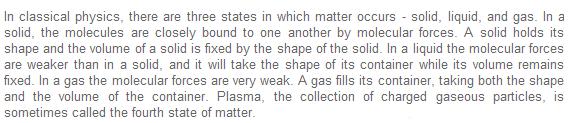
STATES OF MATTER


Gifs ANimados Flechas (101)
If you click on the image above you could go to a web page. There you have to do the activities in the red.

Thursday, March 21, 2013

WHAT DO YOU REMEMBER ABOUT MATTER?

Can you complete this squeme about matter? It can help you to remember what you learnt last year. 

 If you click on the image above you could down load the document.

UNIT 6: MATTER


Thursday, February 28, 2013

Medieval knights, Princesses, Princes, kings and dragons (COOL SCHOOL VIDEO)

sparkling_queen_crown_md_blk
midageflrani6 midageTitle midageflrani6

knight_armored_archduke_looking_lg_blk castle_with_pennants_lg_blk king_henry_king_of_mountain_lg_blk


      redfactsblackbkg
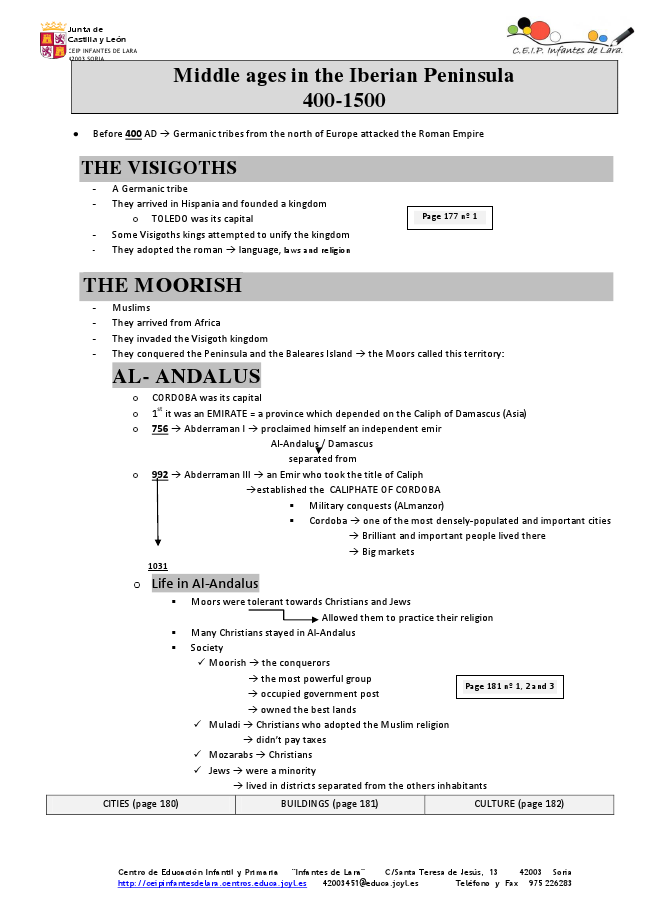
1.  The Middle Ages refers to a time in European history from 400-1500 AD. It occurred between the fall of the Roman Empire and the Renaissance.

2.  Historians usually divide the Middle Ages into three smaller periods called the Early Middle Ages, the High Middle Ages, and the Late Middle Ages.


3.  During much of the  Middle Ages, people in Europe were fighting against the Islamic Empire to take back the Eastern Mediterranean, especially Jerusalem, for the Christian religion. These wars were called the Crusades.


4.  The Middle Ages was defined by a Feudal system in much of Europe.  This system consisted of kings, lords, knights, vassals and peasants. The people who were part of the church played an important part also.  When a person was born into a certain group, they rarely moved to another level.


5.  The Feudal system was the law of the land, and the way that the upper class maintained control over the lower class.  The upper class provided protection to the lower class and in exchange, the lower class worked for the upper class.  The kings and lords lived in castles and were attended to by their personal servants, called vassals. The soldiers that fought for the king and lords were called knights.  When conflict arose, the peasants would leave their fields and villages and come into the safety of the castle walls.


6.  Kings ruled by what they believed was their "Divine Right".  This meant they believed God made them the King, and their kingdom was passed down through generations.


7. Many fairy tales have their roots in the Middle Ages.   When you read about castles and the characters that lived and around them, these stories are being told about this time in history.

8.  Castles were built for the lords and kings who lived in them.  The bigger and stronger the castle, the more weathy the person who had it built.  The poor lived in huts made from sticks, straw and mud.

 9.  The church had a great influence over the people. The peasants believed that the harder they worked, the more of their money they gave to the church, and the more they served the church, the better the after-life would be for them.

10.  By the early 1300s, however, Europe suffered from both war and disease. The wars were made much worse by the Black Death, or bubonic plague, which spread along the Silk Road from China to Europe starting in 1328, killing millions of people and causing the collapse of the Mongol Empire. By the 1400s, after the plague, Europe looked very different, and the wars were over, and Middle Ages were coming to an end.
 

The Middle Ages for Kids - Check these links to learn more about this dangerous but exciting time. 


midageTORCH 


frog_fred_princess_kiss_lg_blk


king_waving_lg_blk


prince_horse_galloping_lg_blk

UNIT 15: MIDDLE AGES